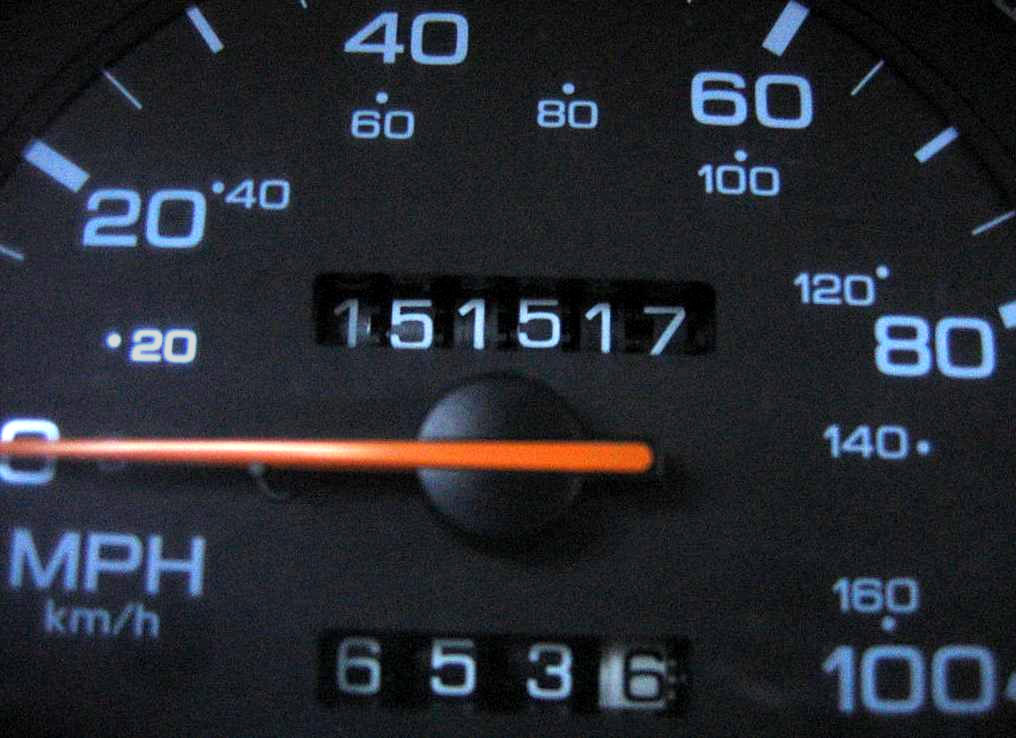
The Mileage Question Nobody Asks Until It's Too Late
When you sign up for PCP, you usually agree to a mileage allowance. On the surface, it sounds simple: if you choose 10,000 miles per year over a three-year agreement, you have 30,000 miles to use.
The problem is that many drivers underestimate how much they actually drive.
And if you get your mileage estimate wrong on a PCP agreement, the resulting excess mileage charge can potentially cost hundreds or even thousands of pounds.
⚠️ Don't guess your mileage
Before taking out PCP, calculate your real annual mileage. Include commuting, shopping, school runs, family visits, holidays, weekend trips and all the other journeys you might normally forget.
How Mileage Limits Work in PCP
The agreement
When you take out a PCP agreement, you normally agree an annual mileage allowance. The finance provider uses this information when calculating the vehicle's expected future value and therefore the structure of the finance agreement.
Common mileage allowances can include:
- 8,000 miles per year — lower-mileage users
- 10,000 miles per year — moderate users
- 12,000 miles per year — higher-mileage users
- 15,000 miles per year — higher-mileage drivers
Exact mileage options vary between finance providers, vehicles and agreements. Some deals may offer lower or higher allowances.
Your total allowance
Your annual mileage is normally multiplied by the length of the agreement.
| Annual Allowance | 3-Year Agreement | 5-Year Agreement |
|---|---|---|
| 8,000 miles | 24,000 miles | 40,000 miles |
| 10,000 miles | 30,000 miles | 50,000 miles |
| 12,000 miles | 36,000 miles | 60,000 miles |
| 15,000 miles | 45,000 miles | 75,000 miles |
So, for example, a 10,000-mile annual allowance over three years gives you an agreed total of 30,000 miles.
What happens if you exceed it?
If you return the vehicle having exceeded the agreed mileage, your finance agreement may require you to pay an excess mileage charge.
The charge is specified in your individual agreement. Rates can vary considerably, but a PCP contract may quote a charge of several pence per excess mile.
💡 Check your actual contract
There is no single standard excess mileage rate that applies to every PCP. Always check the finance agreement for the exact amount before signing.
Real Examples of Excess Mileage Charges
The easiest way to understand excess mileage is to see what happens when the numbers get bigger.
Example 1: Modest overage
- Agreement: 10,000 miles/year
- Term: 3 years
- Total allowance: 30,000 miles
- Actual mileage: 32,000 miles
- Excess: 2,000 miles
- Example charge: 10p per mile
- Potential excess mileage charge: £200
£200 isn't necessarily disastrous, but it is an unexpected cost that could have been avoided by choosing a more appropriate mileage allowance.
Example 2: Serious overage
- Agreement: 10,000 miles/year
- Term: 3 years
- Total allowance: 30,000 miles
- Actual mileage: 40,000 miles
- Excess: 10,000 miles
- Example charge: 10p per mile
- Potential excess mileage charge: £1,000
Now the difference is significant. A driver who underestimated their mileage by around 3,333 miles per year could face a £1,000 charge at a 10p-per-mile rate.
Example 3: Severe overage
- Agreement: 8,000 miles/year
- Term: 3 years
- Total allowance: 24,000 miles
- Actual mileage: 50,000 miles
- Excess: 26,000 miles
- Example charge: 10p per mile
- Potential excess mileage charge: £2,600
This is what can happen when a driver chooses a low mileage allowance but actually drives much more than expected.
The lesson isn't that PCP is always expensive. It's that your mileage allowance needs to match your real driving habits.
How Is Excess Mileage Calculated?
The basic calculation is straightforward.
Excess mileage formula
(Actual miles − Allowed miles) × Excess mileage rate = Excess mileage charge
For example:
- Actual mileage: 40,000 miles
- Allowed mileage: 30,000 miles
- Excess: 10,000 miles
- Contract rate: 10p per mile
Therefore:
10,000 × £0.10 = £1,000
At the end of the agreement, the finance provider can assess the vehicle's mileage against the contractual allowance. The exact method of payment and when the charge becomes payable depends on the finance agreement and how you end the contract.
Important
If you're buying the vehicle rather than returning it, check your contract carefully. The treatment of mileage charges can differ depending on the agreement and end-of-contract route.
How Mileage Works With Hire Purchase
🚗 Hire Purchase has no contractual excess mileage charge
With a standard Hire Purchase agreement, there is generally no agreed mileage allowance and no excess mileage charge simply because you drive more.
You can drive 5,000 miles a year. You can drive 20,000 miles a year. You can drive 50,000 miles a year.
The finance agreement doesn't normally charge you extra simply because you've exceeded a mileage figure.
Why doesn't HP have mileage limits?
The key difference is ownership and residual-value risk.
With PCP, the finance agreement includes an expected future value for the vehicle. Mileage is one of the factors that can affect that future value.
With Hire Purchase, you are financing the purchase of the vehicle. Once you've made all the required payments, the vehicle becomes yours. The finance provider isn't relying on taking the car back at the end and selling it for a predicted residual value.
That doesn't mean high mileage has no financial effect. A car driven 50,000 miles a year will generally depreciate faster and may require more maintenance than a car driven 5,000 miles a year.
The difference is that you absorb that depreciation as the owner, rather than paying a contractual excess mileage charge for returning a PCP vehicle.
How to Estimate Your Actual Annual Mileage
This is one of the most important calculations to make before choosing PCP.
Don't simply look at last year's MOT mileage and assume it will be the same. Your circumstances may change, and many everyday journeys are easy to forget.
Step 1: Calculate your commute
Start with your regular work journey.
- Distance from home to work, one way: _____ miles
- Days driven per week: _____ days
- Weeks worked per year: _____ weeks
Commute formula
(One-way distance × 2) × days per week × weeks per year = annual commute miles
Example
Imagine:
- 25 miles one way
- 5 days per week
- 48 weeks per year
Your calculation would be:
(25 × 2) × 5 × 48 = 12,000 miles
That's 12,000 miles just for commuting.
Step 2: Add personal miles
Now think about all the journeys you make outside work.
- Weekly shopping and errands
- Family visits
- School runs
- Gym or sports
- Social trips
- Weekend drives
- Holidays and road trips
- Trips to garages, dealerships and service centres
- Any other regular journeys
Example personal mileage calculation
| Journey | Frequency | Annual Miles |
|---|---|---|
| Shopping and errands | 30 miles/week | 1,560 |
| Family visits | 60 miles/month | 720 |
| Holiday/road trips | Annual estimate | 1,000 |
| Gym/other journeys | 20 miles/week | 1,040 |
| Total personal mileage | 4,320 |
Step 3: Add everything together
In our example:
12,000 commute miles + 4,320 personal miles = 16,320 miles/year
The honest reality check
Now ask yourself whether you've forgotten anything.
Common mileage underestimates include:
- Annual holidays and long-distance trips
- Additional journeys after changing jobs
- Weekly family visits
- Shopping and errands
- School runs
- Weekend trips
- Unexpected journeys
Once you've calculated your expected mileage, adding a sensible buffer can help account for journeys you haven't anticipated. A 10–15% buffer is one reasonable way to stress-test your estimate, although the appropriate amount depends on your circumstances.
Example with a 15% buffer
16,320 × 1.15 = 18,768 miles/year
If your realistic mileage is around 18,000–19,000 miles a year, choosing a 10,000-mile PCP agreement simply because the monthly payment looks cheaper could be a serious mistake.
Which Mileage Allowance Should You Choose?
Your mileage calculation should drive your decision—not the other way around.
| Estimated Annual Mileage | PCP Consideration | Alternative |
|---|---|---|
| 8,000–10,000 | A 10,000-mile allowance may work if your estimate is reliable and includes a sensible buffer. | HP if you prefer unrestricted mileage. |
| 12,000–15,000 | Consider a 12,000- or 15,000-mile allowance, depending on the actual contract and pricing. | HP may be more attractive for frequent drivers. |
| 16,000–20,000 | Higher-mileage PCP may become expensive, particularly if suitable allowances aren't available at a reasonable price. | HP is worth serious consideration. |
| 20,000+ | PCP mileage charges can become a major consideration. | HP is often a much more natural fit. |
Example: 18,000 miles per year
Suppose you drive approximately 18,000 miles a year but choose a PCP agreement allowing 12,000 miles a year.
Over three years:
- Allowed mileage: 36,000 miles
- Expected actual mileage: 54,000 miles
- Potential excess: 18,000 miles
At a hypothetical 10p per mile, that would be:
18,000 × £0.10 = £1,800
Your actual contract could use a different rate, so this is an illustration rather than a guaranteed charge.
Can You Increase Your PCP Mileage Allowance?
Some finance providers and dealers may offer different mileage allowances before you sign the agreement. Choosing a higher allowance can affect the monthly payment or overall finance cost.
However, there is no universal price for increasing your mileage allowance. The cost depends on the vehicle, finance provider, agreement structure and other terms.
💡 Compare the cost of the allowance
If you're choosing between 10,000 and 12,000 miles per year, ask the finance provider how much the higher allowance changes the total cost of the agreement.
Then compare that additional cost with the potential excess mileage charge if you choose the lower allowance.
For example, if you realistically expect to drive 14,000 miles per year, choosing a 10,000-mile allowance because it gives you a lower monthly payment may simply move the cost to the end of the agreement.
What if your circumstances change?
If your expected mileage changes after signing the agreement, contact your finance provider as early as possible.
Don't assume that the original mileage allowance can simply be changed whenever you want. The provider can explain whether any amendment is possible and what it would cost.
What If You Drive Significantly Less Than Your Allowance?
This is an important point that many people misunderstand.
If you agree to a PCP allowance of 12,000 miles per year but only drive 6,000 miles per year, you generally don't receive a refund simply because you've used fewer miles.
Your finance payments are based on the agreed terms of the contract—not on the number of miles you actually use each month.
Example
You have:
- 12,000-mile annual allowance
- 3-year agreement
- 36,000 total allowed miles
- 18,000 actual miles after three years
You generally don't receive a 50% reduction in your finance payments because you used only half the allowance.
This is one reason it is important to choose a realistic mileage allowance rather than automatically selecting the highest figure—or the lowest figure simply because it produces a lower monthly payment.
Red Flags: When to Rethink PCP
PCP isn't necessarily unsuitable for every high-mileage driver, but there are circumstances where the mileage restrictions deserve serious consideration.
Think carefully before choosing PCP if:
- You're a commuter who regularly drives more than 15,000 miles per year.
- You frequently visit relatives or friends in another city.
- You regularly take long road trips or driving holidays.
- Your job requires unpredictable amounts of driving.
- You are considering changing jobs and your future commute could be significantly longer.
- You cannot confidently estimate your annual mileage.
- Your mileage varies dramatically from year to year.
⚠️ The biggest warning sign
If you don't know how many miles you drive and you're considering PCP, calculate it before signing anything. Guessing low can turn a seemingly cheap finance deal into a much more expensive one.
For drivers with consistently high or unpredictable mileage, Hire Purchase's lack of a contractual mileage allowance can be a significant advantage.
PCP vs Hire Purchase: Mileage at a Glance
| Factor | PCP | Hire Purchase |
|---|---|---|
| Annual mileage allowance | Usually agreed at the start | No contractual mileage allowance |
| Excess mileage charge | May apply when returning the vehicle | No charge simply for driving more |
| Driving 20,000 miles/year | Can become expensive if allowance is too low | No excess mileage charge |
| Driving less than expected | Usually no reduction in monthly payment | No mileage-based payment adjustment |
| Who takes residual-value risk? | Finance provider, subject to agreement terms | Owner ultimately bears vehicle depreciation |
| Best for high-mileage drivers? | Potentially less suitable | Often a strong option |
The Bottom Line
PCP mileage limits are one of the most important parts of the agreement.
Many drivers focus on the monthly payment and overlook the mileage allowance. But if you underestimate your annual mileage, excess mileage charges can add hundreds or thousands of pounds to the cost of returning the car.
The calculation is simple:
Actual miles − agreed miles = excess miles
Those excess miles are then multiplied by the rate specified in your finance agreement.
Hire Purchase works differently. There is generally no contractual mileage allowance and no excess mileage charge simply because you drive more. You own the vehicle once the agreement is completed, so the effect of high mileage is reflected in the vehicle's depreciation and running costs rather than a contractual mileage penalty.
🚗 Before choosing PCP, calculate your mileage
If you drive 16,000, 18,000 or 20,000 miles a year, don't choose a low-mileage PCP deal simply because the monthly payment looks attractive.
Compare the cost of a suitable mileage allowance with Hire Purchase. The difference could save you thousands over the life of the agreement.
If you're struggling to estimate your mileage, that's useful information in itself. An unpredictable mileage pattern can make PCP harder to budget for.
Not Sure How Many Miles You Drive?
Use our car finance calculator to compare your expected mileage and see how different finance options could affect your overall costs.
Launch Calculator